








Resilience & DR
Recovery rehearsed on a schedule, never assumed.
Details
Managed Operations
We don't just monitor your infrastructure. We own the operational outcomes, across baseline operations, continuity, and optimization layers.
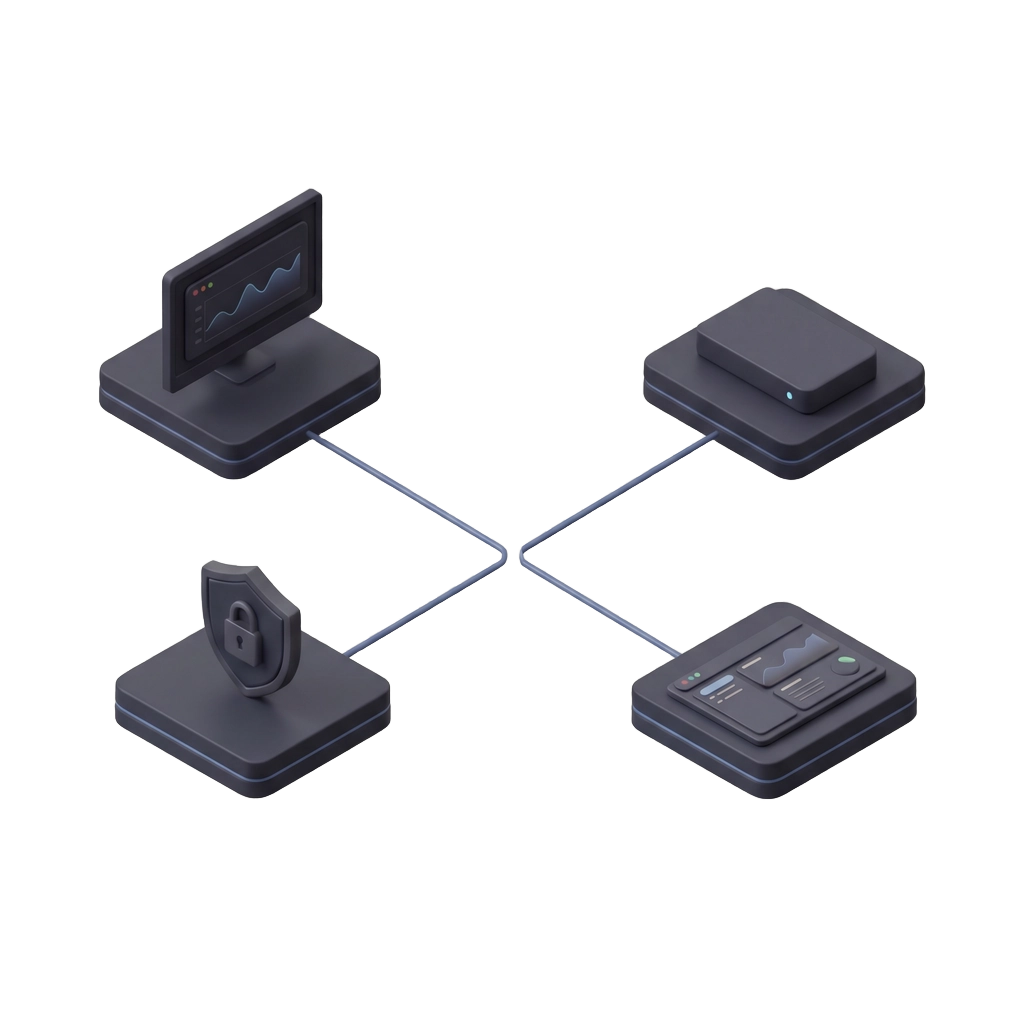
How it runs
This is what managed cloud means here: your workload runs on our infrastructure, the ops loop watches it, and what the loop records becomes your report. Open a station for its specification.
Scope
Everything the machine above does for you, in every package, and the four situations it is built for.
The full operational foundation, not alert forwarding.
Backups and recovery
3-2-1+1 georedundant backups, restore-verified, with quarterly recovery drills.
Incident triage and response
Defined severity levels, escalation channels and a communication cadence.
Patch lifecycle management
Controlled change windows, rollback gates and dependency impact analysis.
Monitoring and observability
Full-stack telemetry, anomaly detection and real-time reporting.
Change governance
Approval gates, risk assessment and acceptance criteria on every change.
Executive reporting
Monthly service reviews and quarterly business reviews.
Capacity planning
Trend analysis and right-sizing before performance degrades.
Evidence
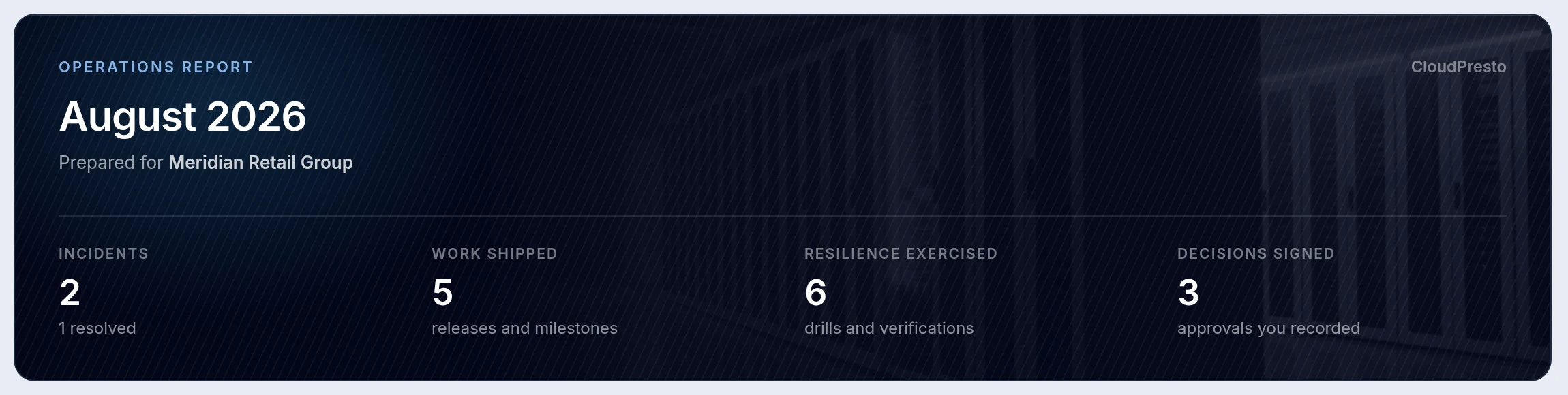
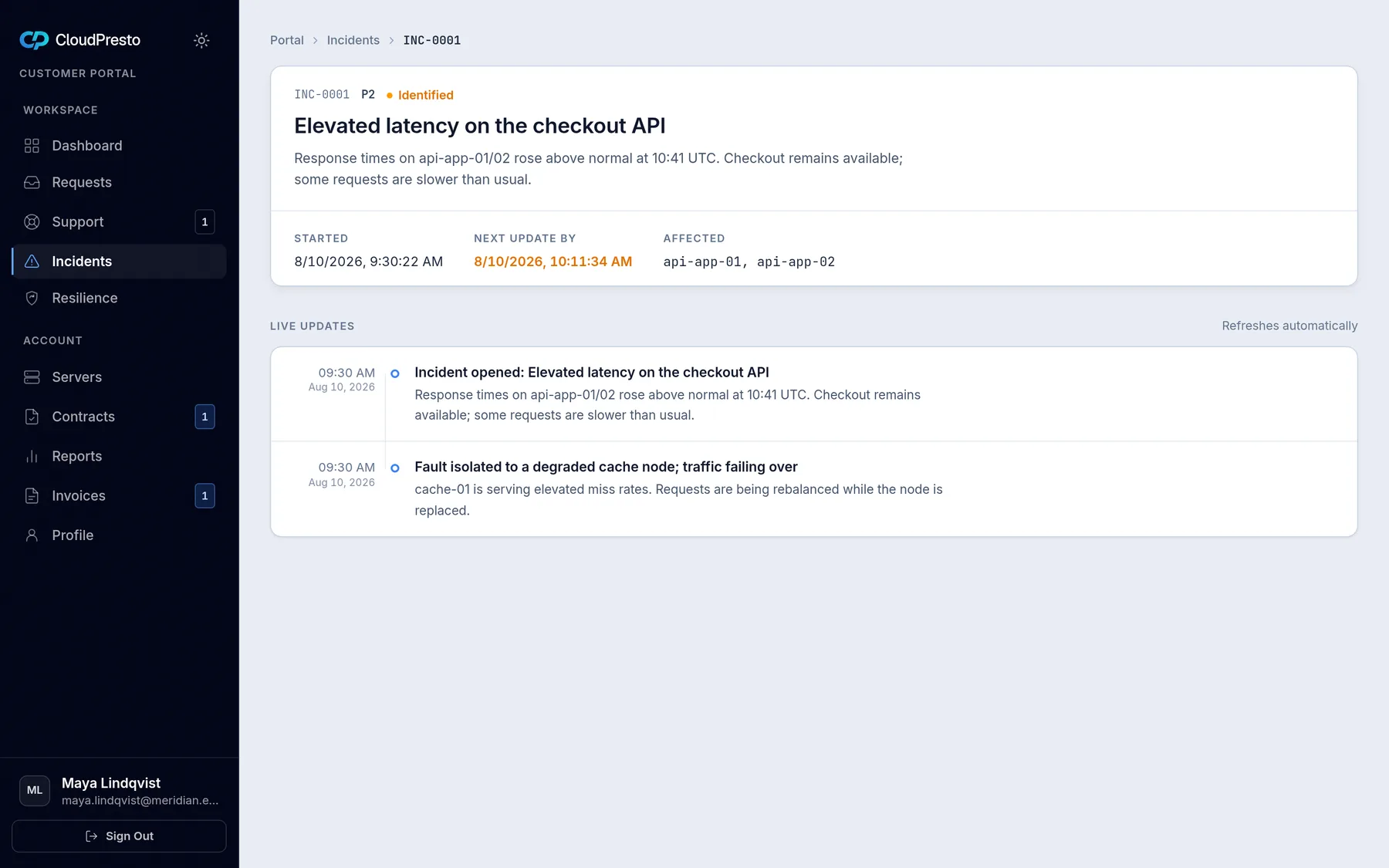
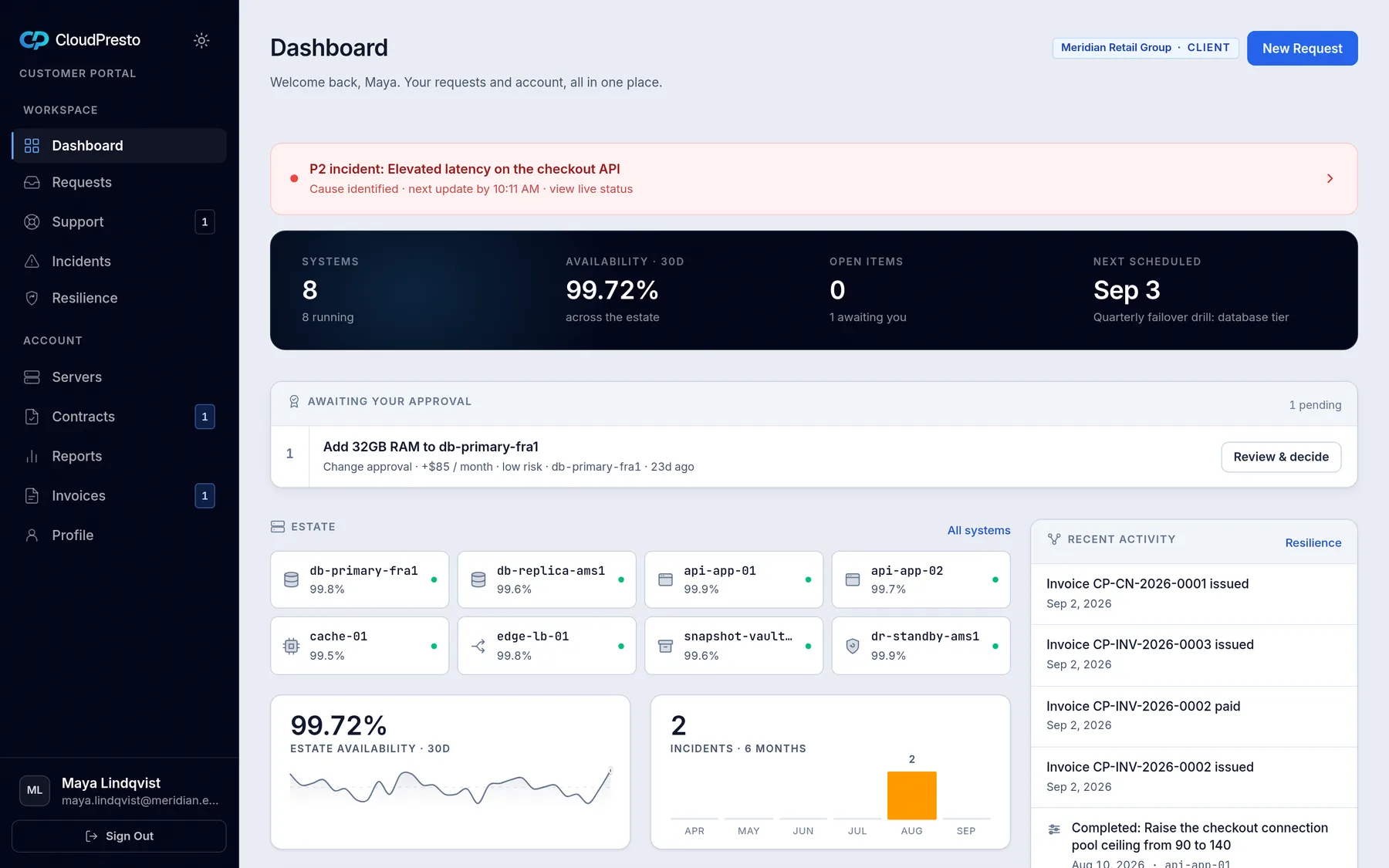
The same machine, watched from the portal, at 3 AM, and in what it hands you every month.
Five exhibits
Exhibit 01 / 05
The same screen we work from: the incident as it is handled, the change waiting for your approval, the estate, the monthly report.
Depth
Each layer builds on the previous one. Start with core operations and expand as your environment matures.
The difference
Now you can judge the difference. Most managed providers forward alerts and wait. We operate your infrastructure: make decisions, execute changes, restore services. You sleep while we work.

| Alert forwarding · most managed providers | CloudPresto operations | |
|---|---|---|
| Decisions | The alert is forwarded to you. You decide, you fix, you follow up. | We make decisions and execute changes end to end, escalating only when business judgment is required. |
| Response | A ticket in a queue, worked in order, best effort. | P1 incidents triaged on priority, with response targets set per engagement and contractual SLAs available on request. |
| Continuity | Backups assumed. Recovery untested until the day it is needed. | Replication-aware architecture and validation-driven recovery, engineered before you ever need it. |
| Control | Their console, their rules, their timing. | The estate and its data stay yours. Operational access is ours, scoped, logged and attributable, with every change visible to you; the calls that are the business's to make stay with you. |
Pricing
Market-informed starting points. Each tier includes provisioned infrastructure capacity, scoped to your workloads. Final scope aligned through qualification and architecture review.
Three tiers · every station in every package
Foundation
Small estates, the full operating model, replicated warm standby included.
Business
Growing estates, more capacity, warm or hot standby to match the workload.
Enterprise
Mission-critical estates, active-active across regions, executive reporting.
Get started
A working session on your estate. We map your current-state risk profile and design a phased operating model for your workloads. Answer three questions and see what yours would cover.

Architecture workshop
Preview your workshop
1 / 3
Production workloads: apps, services, environments.
Pick one to continue
Go further
Collection
Everything you need to understand our managed cloud operations model.
Collection
Detailed guides on incident response, patching, monitoring, and governance.
Guide
How we detect, triage, and resolve incidents before your team even wakes up.
Guide
Deep dive into each capability layer, from baseline ops to governance.

