
Managed cloud
The operations loop that keeps the estate running day to day.
Details
DevOps Delivery
CI/CD pipeline architecture, infrastructure-as-code workflows, and release governance that reduce deployment risk while improving delivery frequency.
How it works
Code your team writes, software we build for you, a change to the estate itself: all of it goes through one delivery layer. Gated, rolled out under watch, rolled back on its own when it degrades, and counted every month. The fastest teams have the most process. It just never gets in the way.
Code your team writes
Pull requests from your repositories, in your toolchain.
Software we build for you
Our application development ships through the same line from the first commit.
Changes to the estate itself
Servers, networks and policies as code, reviewed like any other change.
A commit lands. The pipeline builds and packages it; nothing reaches an environment yet.
Build, gate, canary, promote
Tests, security checks and acceptance criteria must pass before a build is allowed to promote. New versions roll out progressively under watch; a degrading canary reverts the release automatically, before users feel it.
Step through it
Runs in your toolchain
Your tools stay. We add the quality gates, rollback automation and observability that make them reliable.
GitHub · GitLab
Source and pull requests. Gates on every change.
Jenkins
Existing pipelines kept. Gates and promotion added.
ArgoCD
Delivery. Progressive rollout, rollback automation.
Terraform · Pulumi
Infrastructure. Versioned, reviewed, tested.
What is built in
We integrate with your existing toolchain: GitHub, GitLab, Jenkins, ArgoCD, Terraform. Six capabilities in every engagement, with the situation each is there for.
End-to-end pipelines with quality gates and environment promotion.
Built for · Releases that depend on one person who knows the steps.
Versioned, reviewed and tested infrastructure with repeatable deployments.
Built for · Environments that drift apart and nobody can rebuild.
Promotion gates, rollback criteria and a change rhythm that fits your risk.
Built for · Change freezes because the last release hurt.
Instrumentation and SLO-aligned telemetry that shows impact fast.
Built for · Incidents found by customers before the dashboards.
Incident diagnostics, performance troubleshooting and change management.
Built for · Developers pulled off the roadmap to keep production up.
The four DORA metrics, tracked and reviewed with your team.
Built for · Velocity nobody can measure or defend.
The gate
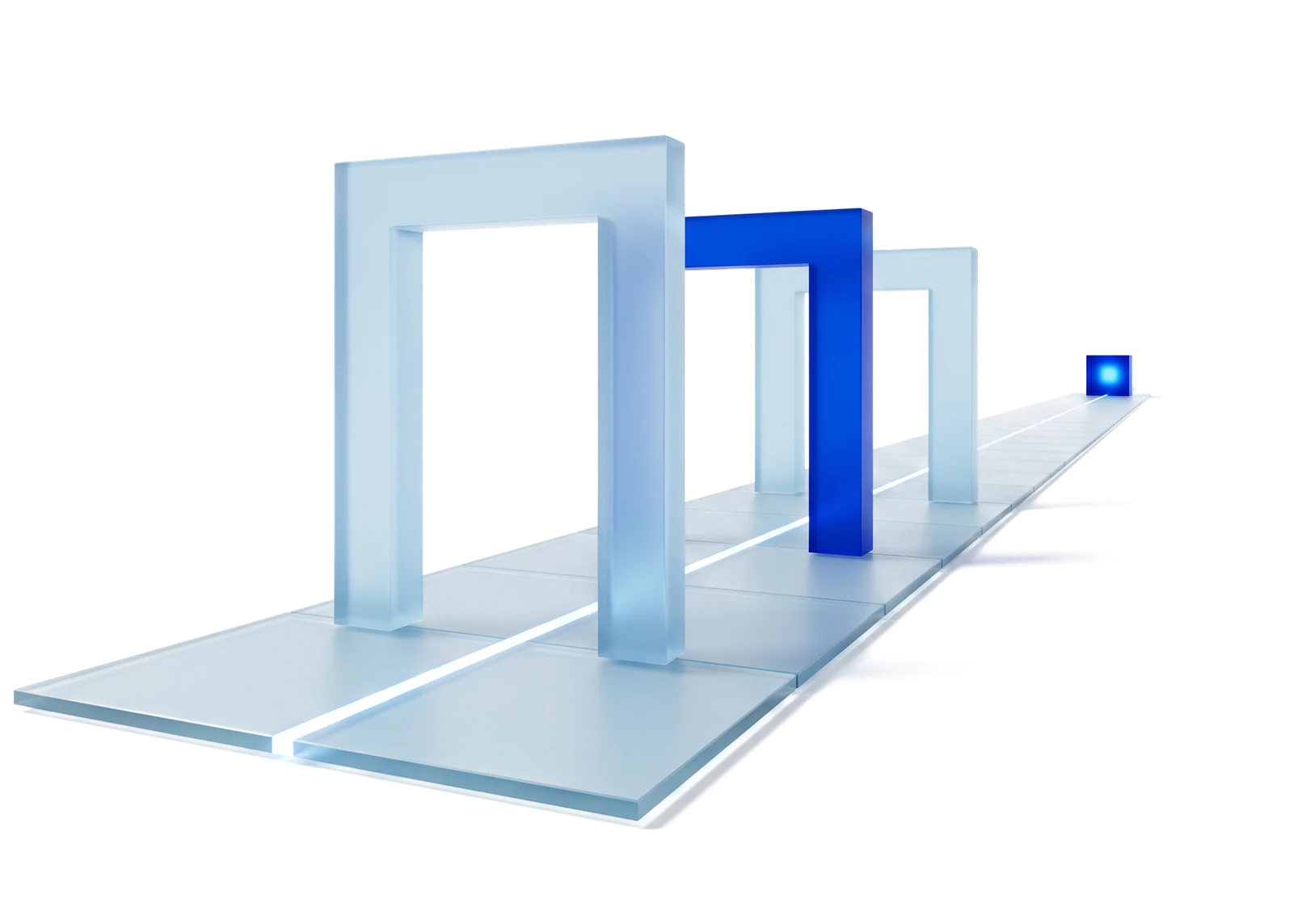
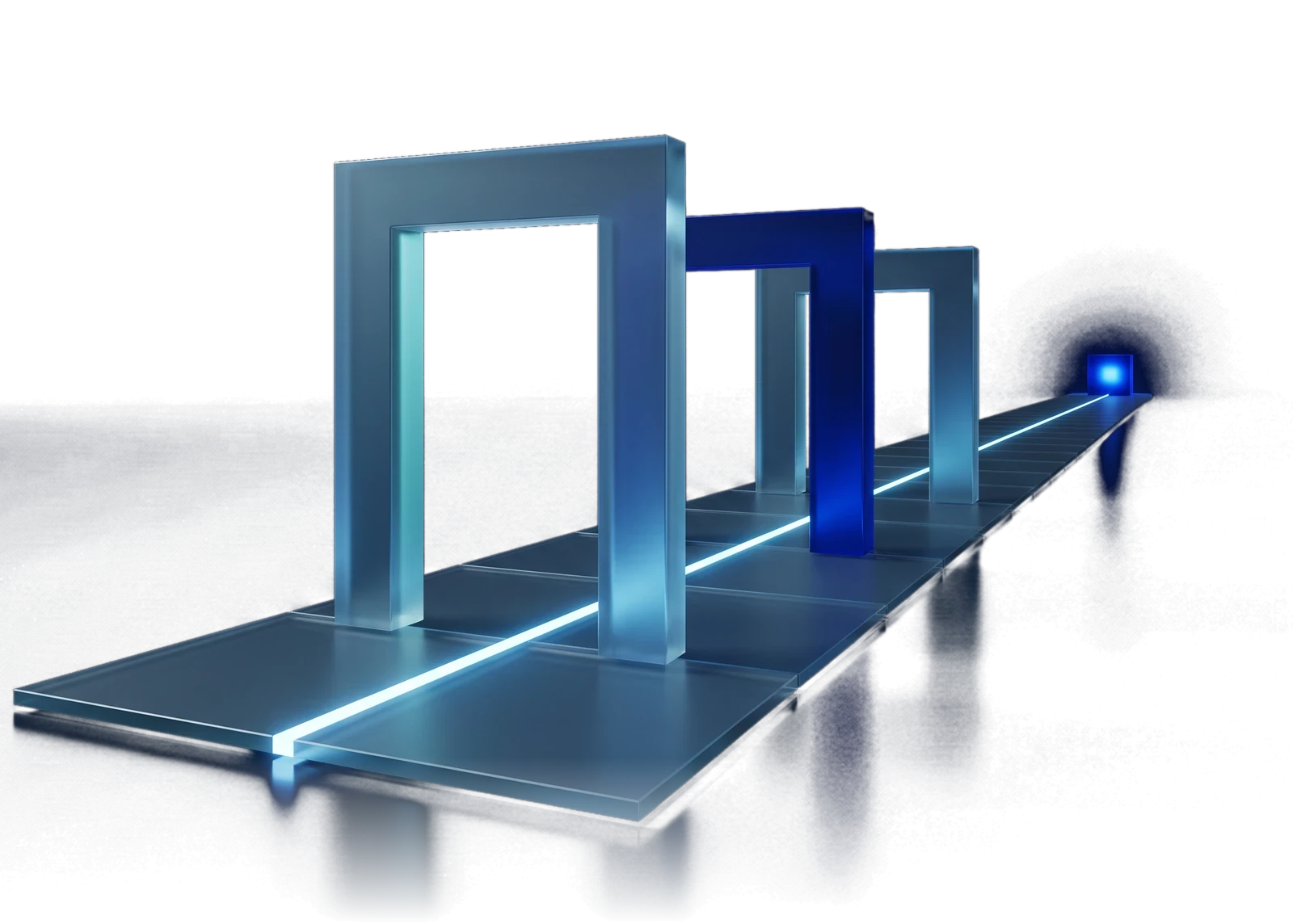
Every change climbs the same ladder. A red rung stops it; a degrading canary sends it back. Speed comes from the ladder being automatic, never from skipping rungs.
Promotion record · release r3 · values illustrative
01
Tests, security checks, acceptance criteria
Must pass before a build is allowed to promote.
02
Progressive rollout under watch
New versions roll out progressively, so a bad change is contained to a sliver of traffic.
03
Automatic rollback
Failed gates or degrading canary metrics revert the release automatically, before users feel it.
04
The four DORA metrics
Deploy frequency, lead time, change-failure rate, and recovery time tracked against elite benchmarks.
Promoted to production · rollback window open
4 / 4Delivery metrics
We track the four DORA metrics: deployment frequency, lead time for changes, change failure rate, and time to recovery, benchmarked against elite-tier targets and reviewed with your team.
Delivery review · the four DORA metrics
Targets: DORA elite tier
Deployment frequency
How often you ship to production
Elite target
Multiple per day
Your baseline
From the audit
Lead time for changes
Time from commit to production
Elite target
Under 1 hour
Your baseline
From the audit
Change failure rate
Share of deploys that cause incidents
Elite target
Under 5%
Your baseline
From the audit
Time to recovery
How fast you restore after a failure
Elite target
Under 1 hour
Your baseline
From the audit
How we work
Most estates hand us the whole thing: we build the software, run the delivery layer and operate production on our cloud. Some bring their own team. Either way the same gates, rollouts and numbers apply.
We build and ship it
Application development on the pipeline from the first commit. You see releases and the numbers.
Your team ships through it
Your developers merge; our delivery layer gates, rolls out and rolls back. We join your Slack and standups.
We take over what you have
An existing pipeline, kept and hardened. Gates and rollback added, then operated.
How every engagement starts
01
Baseline the estate
Map what ships today and how, identify the bottlenecks, and measure the current DORA metrics as a baseline.
02
Design the delivery layer
Pipeline architecture, quality gates, rollback strategy and observability, scoped to the stack and to who ships.
03
Cut over without a pause
The new line runs beside whatever exists. Workloads move gradually. Release cadence never stops. By design.
04
Operate and review
We run the delivery layer day to day, track the four numbers and review them with you every month.

The difference
A pipeline is a tool. Anyone can install one. Delivery is a discipline: gates that hold, rollouts that are watched, rollbacks that fire on their own, and numbers reviewed every month with the people who ship.
| Pipeline as a tool · the usual setup | CloudPresto delivery | |
|---|---|---|
| Gates | Tests run when someone remembers to run them. | Tests, security checks and acceptance criteria run on every change and block promotion when they fail. |
| Rollout | Deploy everything at once and watch the error rate. | Canary first: a sliver of traffic under watch, then progressive rollout as the metrics hold. |
| Rollback | Someone finds the last good build and redeploys it by hand. | Degrading canary metrics revert the release automatically, before users feel it. |
| Metrics | Velocity is a feeling, argued about in retros. | The four DORA metrics measured monthly against elite benchmarks and reviewed with your team. |
Get started
We map your existing CI/CD end to end, identify the bottlenecks, and measure your current DORA metrics as a baseline. The assessment ends in a prioritized plan to ship faster with less risk.
What the assessment produces
01
Pipeline map
Every stage of your current CI/CD, where it waits, where it breaks.
02
DORA baseline
Your four numbers today, measured from your own history.
03
Prioritized plan
Gates, rollback and observability changes in the order that pays back fastest.
Go further
Collection
The delivery model: pipelines, gates, rollback and the numbers we track.
Collection
Detailed guides on CI/CD, IaC, release governance and observability.
Guide
Why the fastest teams have the most process, and what that process is.
Guide
The four numbers, how we measure them, and what elite looks like.

