



Managed cloud
The operations loop that takes over at handoff.
Details
Cloud migration
We migrate your workloads onto CloudPresto's managed cloud in controlled waves: each one assessed, run in parallel, validated, and reversible. You stay live the whole way.
How it works
Your estate does not move in one night. It moves in waves: each one assessed, built beside the old, run in parallel, validated under real load, and only then switched. Every wave has a tested way back, and the next one waits until the last has landed.
01
Assess
Every workload, dependency and data flow mapped; a baseline measured; a migration order ranked by risk and effort.
02
Design
The target architecture on our cloud, the cutover sequence, the checks each workload must pass, the rollback for every step.
03
Migrate in waves
Old and new run side by side. Traffic shifts only after the new path proves itself. Each wave lands before the next begins.
04
Operate
Once you are on our cloud we run it end to end. The migration team hands off to operations with full context.
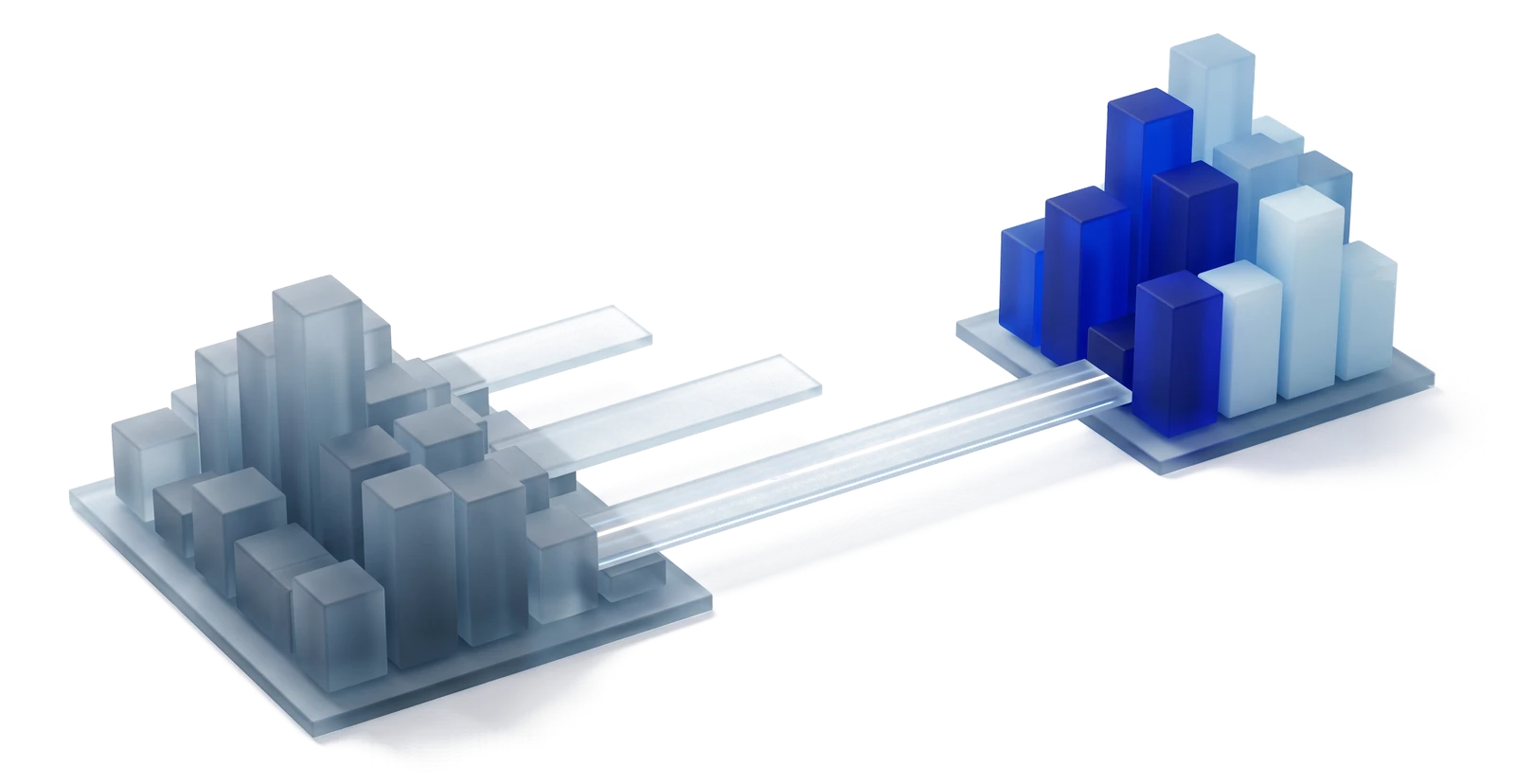
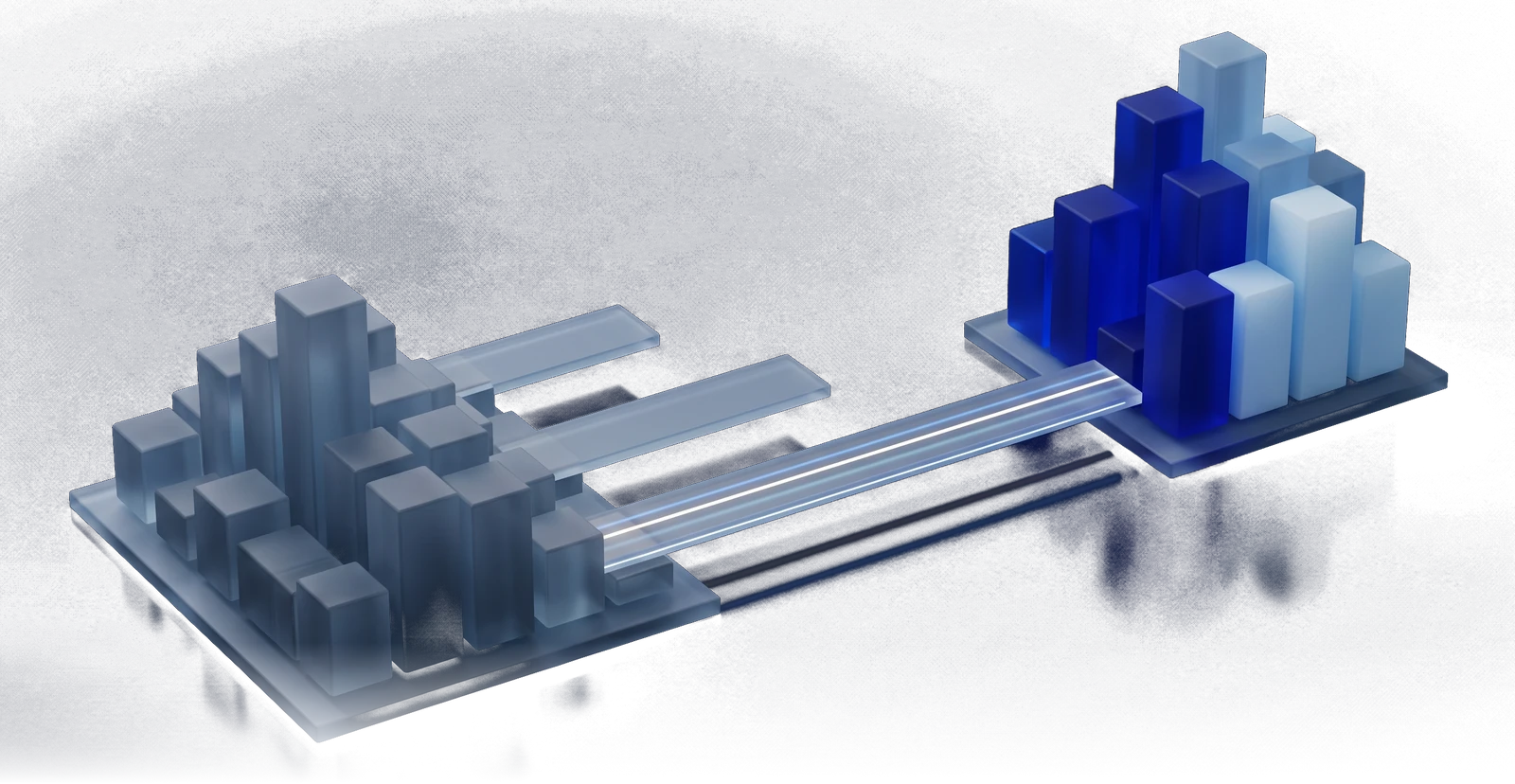
One wave · what its cutover goes through
No big-bang cutovers
01
Parallel run
The wave is built on our cloud beside the old. Data replicates; both sides serve.
02
Validation checks
The checks defined in design run under real load: integrity, performance, reachability.
03
Traffic shift
DNS and routing move a slice at a time. The old path stays warm.
04
Rollback window closes
When the wave has held, the old path is retired and the next wave starts.
What moves
Six kinds of workload, each with its own way of moving and its own checks. The assessment puts them in order; low-risk first, so confidence is built before the hard ones.
Web apps, APIs and microservices, containerised and re-platformed onto a managed runtime.
Built for · Services nobody dares redeploy.
Relational and NoSQL stores moved with replication, cutover windows and integrity checks.
Built for · The database that has never been restored.
Object and block storage moved with retention preserved and recovery validated on the far side.
Built for · Backups that exist but were never tested.
Segmentation, firewall policy and DNS cutover sequenced so traffic shifts cleanly.
Built for · A flat network with rules nobody remembers.
Build and deploy pipelines rebuilt against the new environment, quality gates intact.
Built for · Deploys that only work from one laptop.
Access, roles and secrets moved into a managed model with least privilege enforced.
Built for · Shared credentials in a spreadsheet.
Risk controls
Four controls on every wave, and a readiness checklist before the first one. None of it is a promise about how fast; all of it is about never being one step from an outage you cannot undo.
Four controls · what each one rules out
Phased
Workloads move a slice at a time.
Rules out: A failure that takes the whole estate with it.
Parallel-run
Old and new run side by side until the new path is proven under real load.
Rules out: Discovering the problem after the old system is gone.
Validated
Each step clears defined checks before traffic shifts to it.
Rules out: A cutover that "seemed fine" until Monday.
Reversible
Every step has a tested way back.
Rules out: Being committed to a bad cutover.
Readiness checklist · before the first wave
After cutover
The migration is the start, not the finish. You arrive on our own infrastructure across the US, EU and Asia, with one operator accountable for the whole stack. Monitoring, patching, resilience and optimisation carry on from day one.
US·EU·Asia
Own-cloud footprint
99.9%
Uptime standard
24/7
Operations after cutover
0
Big-bang cutovers
The handoff · migration team to operations
01
Runbooks and dependency map
Everything discovered in the assessment, kept current through the waves, handed over as the operating record.
02
Monitoring and severity
Every migrated workload watched from the day it lands, alerts graded P1–P4.
03
Backups and drills
The 3-2-1+1 floor from the first wave; recovery drilled on schedule.
04
The monthly review
Capacity, cost and change, reviewed with you. The hybrid state runs for as long as it makes sense.
How we work
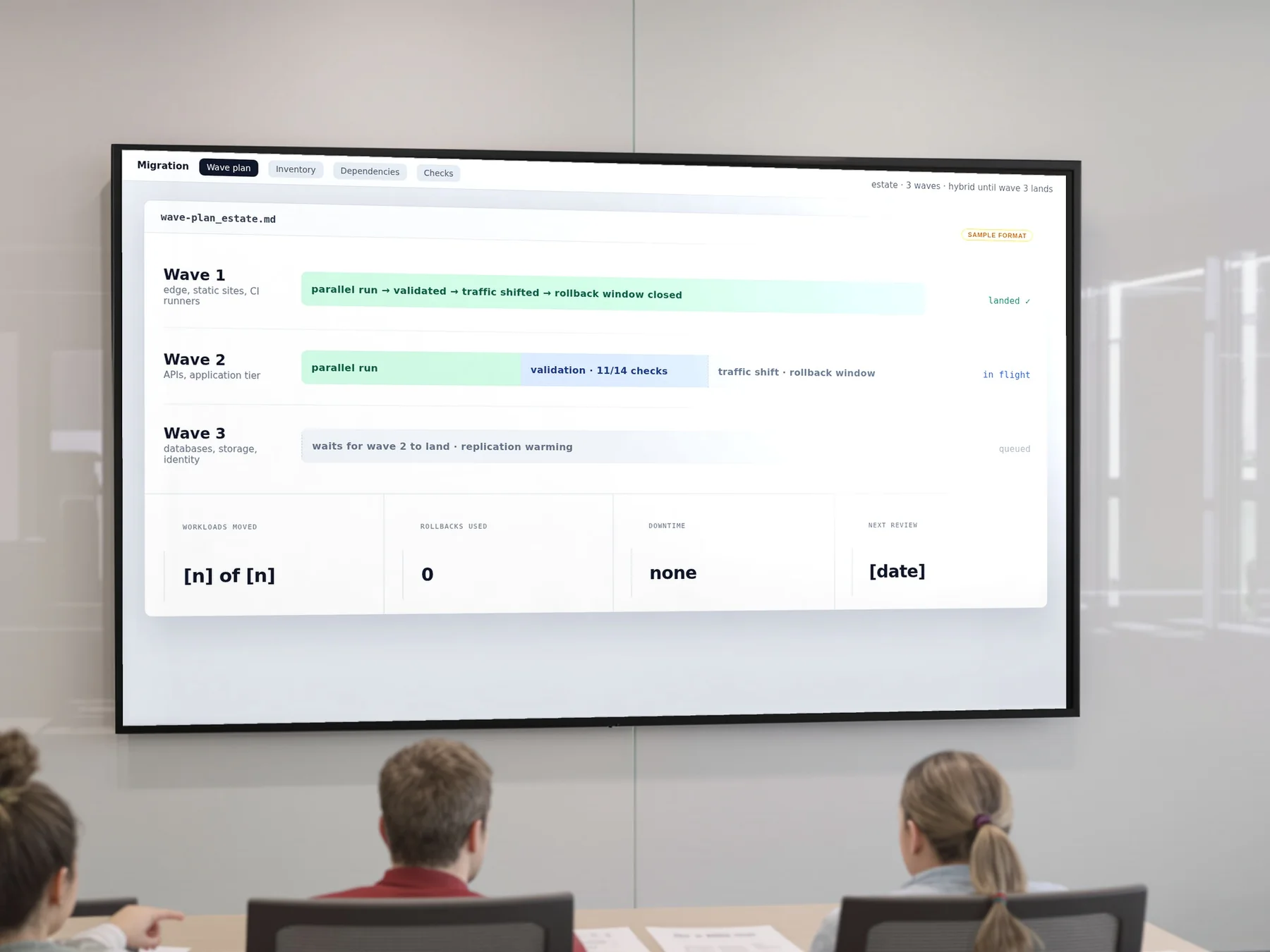
An assessment maps your estate and names the risks up front. You get the wave plan before anything moves, and the first wave is the lowest-risk one, chosen to prove the method on your own systems.
01
Assessment
Inventory, dependency map, baselines, risk ranking. Read access to your environment, nothing more.
02
The wave plan
Target architecture on our cloud, the order of waves, the checks and the rollback for each.
03
Wave by wave
Each wave built, run in parallel, validated and switched; a review after each before the next starts.
04
Handoff
The migration team hands the estate to operations with the full record, and the monthly review begins.
Get started
Tell us what is moving and what worries you. We map the estate and design the phased path onto our cloud, with the risks named up front.
What the assessment produces
01
The inventory and dependency map
Every workload and what it talks to, with a criticality tier.
02
The wave plan
The order of moves, low-risk first, with checks and rollback for each.
03
The risks, named
What could hurt, what we do about it, and what stays hybrid for now.
Go further
Collection
The operations model you land on: foundation, incidents, onboarding.
Guide
What to audit, prepare and validate before the first wave.
Guide
From assessment to steady state, step by step.
Guide
How every change, including a cutover, is approved and reversed.

